Weather-information literacy
Malaysia Rain Forecast or Weather Warning? Read the Area and Clock Before Travelling
A rain icon and a forwarded warning are not the same evidence. Check METMalaysia’s area, issue time and validity before changing a Singapore–Malaysia MPV trip.
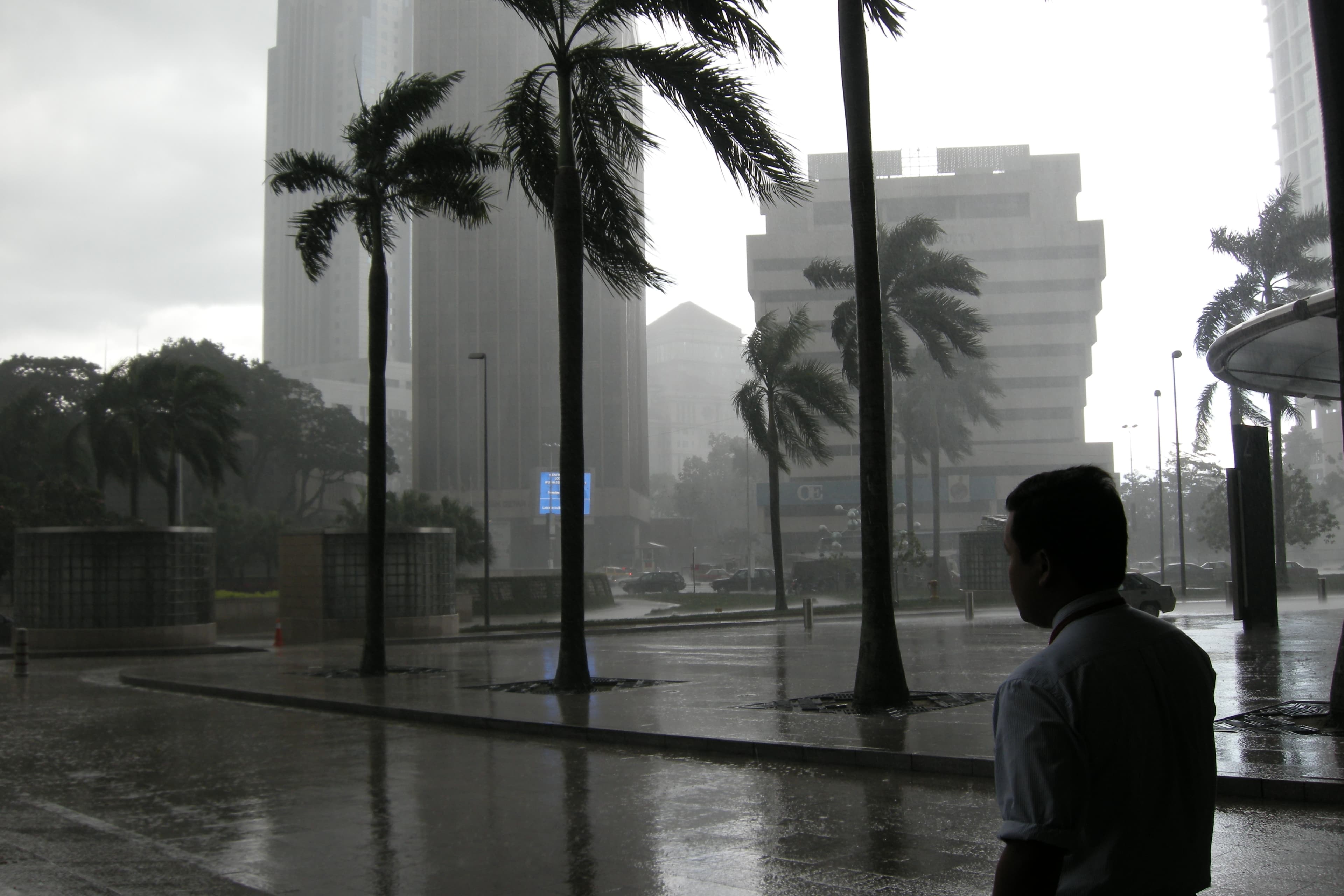
Historical KL rain photograph: Vyacheslav Argenberg, 25 March 2008, CC BY 4.0. Original bytes unchanged; responsive display/crop. This is not today’s weather, an official warning or our customer journey.
A rain symbol is not an issued warning
For a Singapore–Malaysia journey, separate a forecast from an issued weather warning. A forecast helps you plan; a warning has its own affected area, issue time and valid period. Neither a sunny icon for one town nor a warning that has already expired proves the whole road journey is safe.
Start with METMalaysia’s official website or myCuaca, rather than the date a friend forwarded an image. The department describes myCuaca as providing forecasts, warnings, radar and satellite information. Those are different information products, not interchangeable green lights for a trip.
Read four fields before sharing the notice
Read the warning type, named state or districts, issue date and time, and the period it covers. Match them to your actual Malaysian destination and journey date. Keep the original official link with your summary so another traveller can see whether a newer notice has replaced it. Do not add a district merely because it is nearby.
METMalaysia describes a thunderstorm warning as short-duration, no more than six hours for one issue; a worsening longer episode can move into continuous-rain warning. Continuous rain has separate Alert, Severe and Danger criteria. These labels are not predicted checkpoint delays, vehicle capability ratings or instructions to wait exactly six hours and then drive.
Change the day’s plan, not just the photograph you share
Here is an invented planning example, not a customer case or today’s warning: a group saves a Saturday weather notice but travels on Sunday to a different district. Their next step is to open the current official source and confirm which area and time it now covers—not to guess that the old image still applies.
If the relevant authorities or venue restrict access, follow that information and discuss postponing or removing the optional stop. A move indoors does not establish that the approach road is clear, and an MPV booking does not prove a boat or outdoor activity will operate. Confirm each part with the responsible operator; do not turn this guide into permission to travel through dangerous conditions.
Ask about a revised journey with the current information
When discussing a change, send the travel date, exact destination and the official warning link or timestamp, then say what you want to change. Ask whether a revised route, date or pickup is feasible and what the quoted change terms are. Do not assume a free cancellation, unchanged fare or guaranteed alternative vehicle.
The illustration is a real 2008 Kuala Lumpur rain photograph, clearly dated below it. Like an old screenshot, it cannot report today’s conditions. Information checked 30 October 2026; use the current official notice nearer the journey, and keep unconfirmed road, venue and transport availability unknown.
Need a quote for this route?
Send your pickup, drop-off, date, time, passengers and luggage through WhatsApp for a clear vehicle recommendation.
WhatsApp for QuoteFAQ
Does an expired thunderstorm warning mean the route is safe?
No. Look for the current official information for the relevant area and period, and follow any road or venue restrictions. Expiry is not a road inspection.